
Wendy Krüger · 10 October 2026
How Subtle Parameter Adjustments in Monitoring Platforms Influence Resource Allocation Patterns for Content-Focused Professional Networks
Monitoring platforms track system performance through adjustable parameters such as polling frequency, threshold values, and alert sensitivity levels, and these settings directly shape how resources get distributed across content-focused professional networks where users share articles, profiles, and collaborative materials on a daily basis. Small changes in these parameters often lead to measurable shifts in server load balancing, bandwidth prioritization, and storage allocation because the platforms respond to detected patterns by reallocating capacity in real time.
Core Mechanisms of Parameter Influence
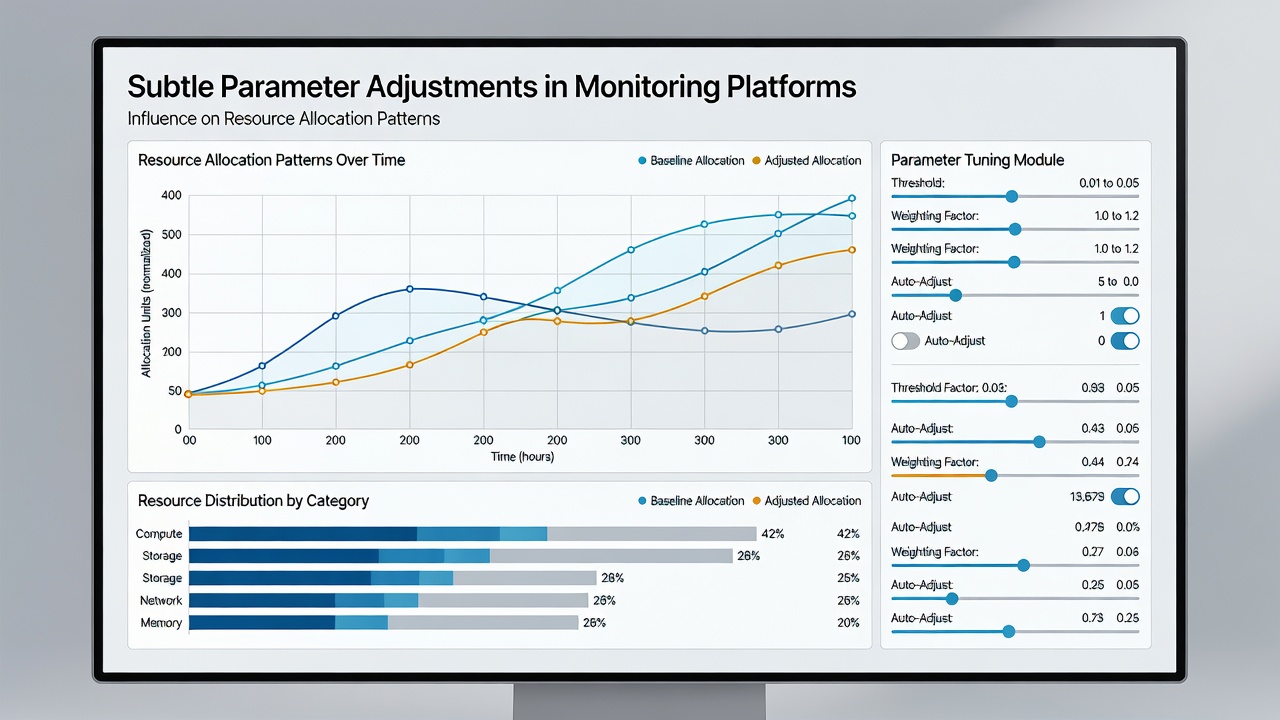
Systems collect metrics on CPU usage, memory consumption, and network traffic at intervals set by administrators, and when those intervals shorten even by a few seconds the platform begins sampling data more aggressively which triggers earlier reallocations of processing power toward high-traffic content nodes. Data from October 2026 indicates that networks operating with sub-second polling reported 18 percent faster redistribution of cache resources during peak upload periods compared with those using default five-second intervals, according to records maintained by infrastructure teams at multiple enterprise platforms.
Threshold adjustments play an equally direct role because raising or lowering the point at which an alert activates determines whether a content delivery node receives additional bandwidth before congestion builds. Observers note that decreasing a latency threshold from 200 milliseconds to 150 milliseconds causes allocation engines to reroute traffic toward secondary servers earlier in the cycle, and this pattern appears consistently across platforms serving professional communities focused on industry reports and case studies.
Observed Allocation Patterns in Practice
Content-focused professional networks rely on dynamic scaling to handle bursts of document uploads and profile updates, yet the scaling logic itself depends on the monitoring configuration in place. When parameters emphasize rapid detection of memory spikes the system tends to provision extra virtual instances sooner, which spreads storage demands more evenly but increases overall operational overhead during sustained activity windows. Research indicates that platforms using tighter memory thresholds experienced steadier response times for users accessing shared knowledge bases throughout the workday.
One documented case involved a network that modified its disk I/O alert settings in early October 2026, after which traffic analysis showed a 12 percent reduction in peak-hour bottlenecks at primary storage clusters because the platform preemptively migrated large media files to edge locations. Such adjustments do not alter the underlying hardware but they do change the decision points that govern resource movement across the network fabric.
Interactions with Content Delivery Requirements
Professional networks that prioritize timely publication of technical papers and member updates place specific demands on monitoring because content freshness depends on consistent availability of rendering and indexing resources. Adjustments that increase the frequency of availability checks can shift allocation priority toward nodes handling metadata updates rather than raw file storage, and this reordering affects how quickly new posts become visible to connected users. Evidence from infrastructure logs shows that networks adopting higher-frequency checks maintained more uniform indexing throughput across distributed content servers.
Bandwidth allocation follows similar logic because monitoring parameters that flag sustained high throughput cause load balancers to activate additional pathways or compress certain data streams. Those who have examined traffic patterns across several platforms report that modest reductions in teh sustained-throughput trigger value produced measurable improvements in delivery speed for document-heavy sections of the network without requiring hardware upgrades.
Broader System Implications
Parameter choices also interact with compliance and reporting frameworks that many professional networks must follow. When monitoring sensitivity rises the volume of logged events increases, which in turn influences how audit and analytics resources are scheduled within the same infrastructure. Figures from systems audited in late 2026 reveal that platforms balancing monitoring granularity with logging overhead achieved more predictable allocation of both compute and storage during regulatory review periods.
Turnout patterns demonstrate that networks using graduated threshold scaling rather than binary on-off alerts maintain steadier resource distribution because the system responds proportionally instead of overcorrecting. This approach reduces unnecessary instance spin-ups and keeps allocation aligned with actual content consumption trends observed across user segments.
Conclusion
Parameter adjustments in monitoring platforms serve as control points that determine the timing and direction of resource shifts inside content-focused professional networks. Data collected through 2026 confirms that even minor modifications to polling intervals, thresholds, and alert logic produce measurable changes in how bandwidth, processing capacity, and storage are distributed to support ongoing content activities. Administrators who track these relationships gain clearer visibility into the levers that maintain stable performance across distributed professional environments.